Threat Assessment Isn’t About Prediction—It’s About Intervention
Introduction: The Most Common Misunderstanding in Threat Assessment
When most people hear the phrase threat assessment, they think of prediction.
They imagine trying to determine:
- Who might become violent
- Whether someone is “dangerous”
- If an incident is inevitable
That misunderstanding has quietly undermined countless prevention efforts.
Threat assessment was never meant to predict the future. It exists to change it.
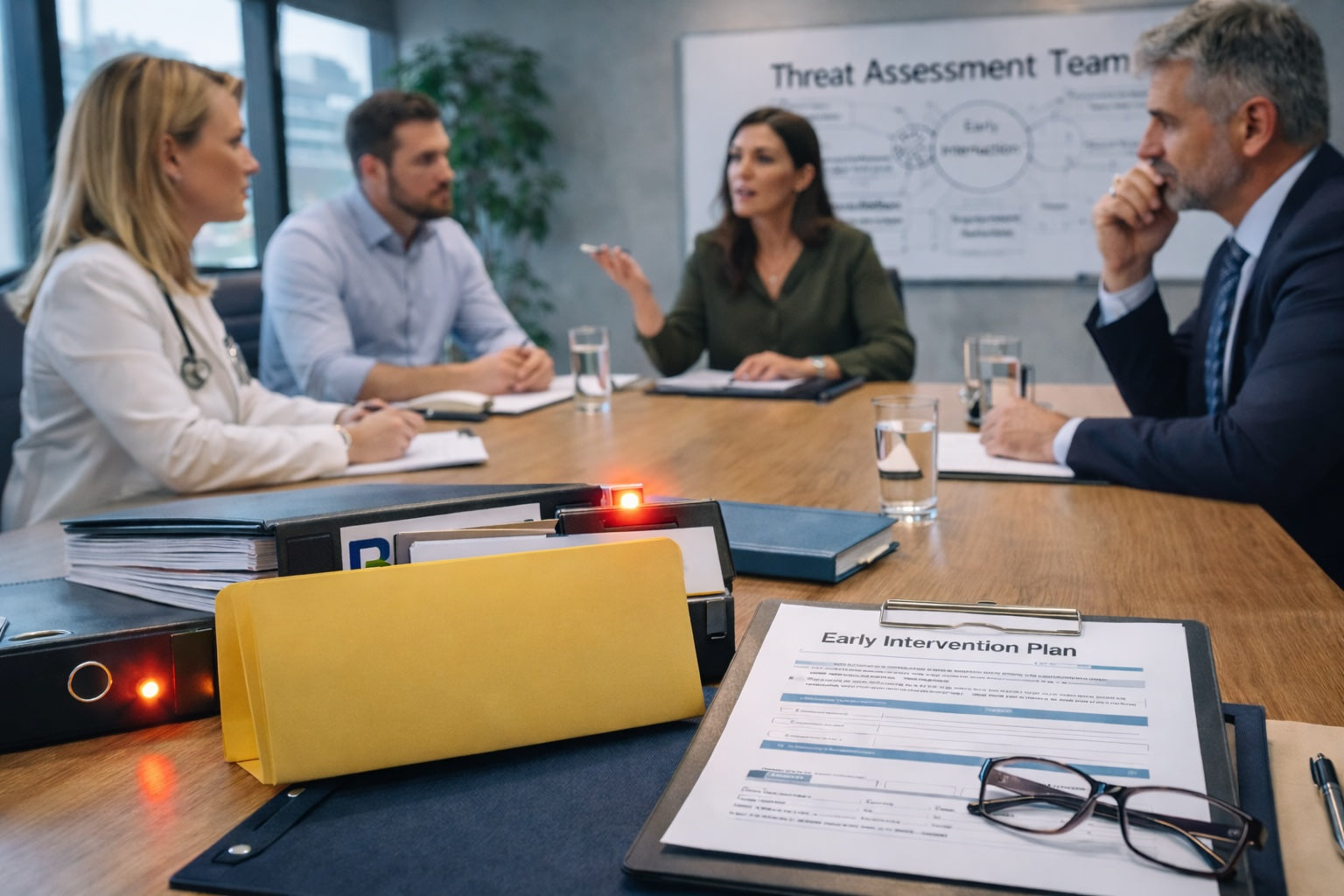
At its core, threat assessment is an intervention strategy—one designed to identify concerning behavior early, reduce risk over time, and prevent escalation through coordinated, proportionate action.
Organizations that treat threat assessment as a crystal ball often abandon it when it fails to provide certainty. Organizations that understand it as an intervention tool quietly prevent incidents that never make headlines.
Why Prediction Is the Wrong Goal
Human behavior is not linear.
People do not move cleanly from stress → anger → violence. They fluctuate. They stabilize. They escalate. They de-escalate. Context, support, and intervention matter.
Attempting to predict violence assumes:
- Static personalities
- Clear warning signs
- Predictable trajectories
Real-world cases rarely behave that way.
When organizations frame threat assessment as prediction, they create two dangerous outcomes:
- False confidence when risk appears low
- Overreaction when uncertainty feels high
Neither reduces harm.
Intervention—not certainty—is what changes outcomes.
What Threat Assessment Is Actually Designed to Do
Effective threat assessment focuses on three core questions:
- Is there concerning behavior that warrants attention?
- What factors are increasing or decreasing risk right now?
- What actions can reduce risk and support stabilization?
Notice what’s missing:
- Labels
- Diagnoses
- Binary judgments
Threat assessment is a process, not a verdict.
Its purpose is to:
- Detect patterns early
- Coordinate resources
- Reduce stressors
- Interrupt escalation
When done well, it often resolves situations quietly—without discipline, termination, or law enforcement involvement.
Why Organizations Struggle With Threat Assessment
1. It’s Activated Too Late
Many organizations only engage threat assessment when behavior has already crossed a visible threshold:
- Explicit threats
- Severe disruption
- Policy violations
By that point, options are limited and responses become reactive.
Threat assessment is most effective before behavior becomes extreme—when intervention can still be subtle and supportive.
2. It’s Treated as an Event, Not a Process
Some organizations convene a threat assessment meeting, document findings, and consider the matter closed.
But risk is dynamic.
Threat assessment requires:
- Ongoing monitoring
- Periodic reassessment
- Adjustments as circumstances change
When assessment is treated as a one-time action, it loses relevance almost immediately.
3. It’s Confined to a Single Department
Threat assessment cannot function effectively in silos.
When responsibility sits entirely within:
- HR
- Security
- Legal
- Management
Critical context is missed.
Effective threat assessment requires a multidisciplinary perspective—one that balances safety, legal considerations, mental health insight, and organizational realities.
The Power of Early, Proportionate Intervention
One of the most underappreciated aspects of threat assessment is proportionality.
Not every concerning behavior requires:
- Discipline
- Removal
- Escalation to authorities
In fact, heavy-handed responses often increase risk by:
- Heightening stress
- Reinforcing grievance
- Creating shame or isolation
Early intervention might include:
- Supportive check-ins
- Workload adjustments
- Conflict mediation
- Access to resources
- Clear expectations
These actions may appear minor—but they often interrupt escalation before it becomes visible.
Threat Assessment and the Role of Trust
Threat assessment depends on information.
Information depends on people being willing to speak up.
When employees believe:
- Reporting leads to overreaction
- Concerns will be ignored
- The process is punitive
They stop sharing what they see.
Organizations that successfully implement threat assessment invest heavily in psychological safety—making it clear that reporting concerns is about support and prevention, not punishment.
Without trust, threat assessment becomes blind.
Leadership’s Influence on Threat Assessment Effectiveness
Leadership sets the tone long before a threat assessment team is activated.
Leaders influence whether:
- Early concerns are taken seriously
- Gray-area behaviors are discussed openly
- Intervention is viewed as supportive or disciplinary
When leaders frame threat assessment as a risk management tool, teams tend to default to defensiveness.
When leaders frame it as a harm reduction and support process, teams are more likely to intervene early and appropriately.
Leadership does not need to run threat assessment—but it must legitimize it.
Moving From “Who Is the Threat?” to “What Is Happening?”
One of the most damaging questions organizations ask is:
“Is this person a threat?”
That framing personalizes risk and narrows options.
A more effective approach asks:
- What stressors are present?
- What behaviors are changing?
- What supports are missing?
- What boundaries need reinforcement?
This shift moves the focus from judgment to management.
Threat assessment is not about identifying bad people.
It is about understanding risky situations.
Measuring Success in Threat Assessment
The paradox of effective threat assessment is that success is often invisible.
There is:
- No incident
- No arrest
- No termination
- No headline
Instead, success looks like:
- Stabilized behavior
- Reduced complaints
- Improved engagement
- Quiet resolution
Organizations that judge threat assessment solely by dramatic outcomes misunderstand its value.
Prevention is rarely loud.
Integrating Threat Assessment Into a Broader Prevention Strategy
Threat assessment does not stand alone.
It works best when integrated with:
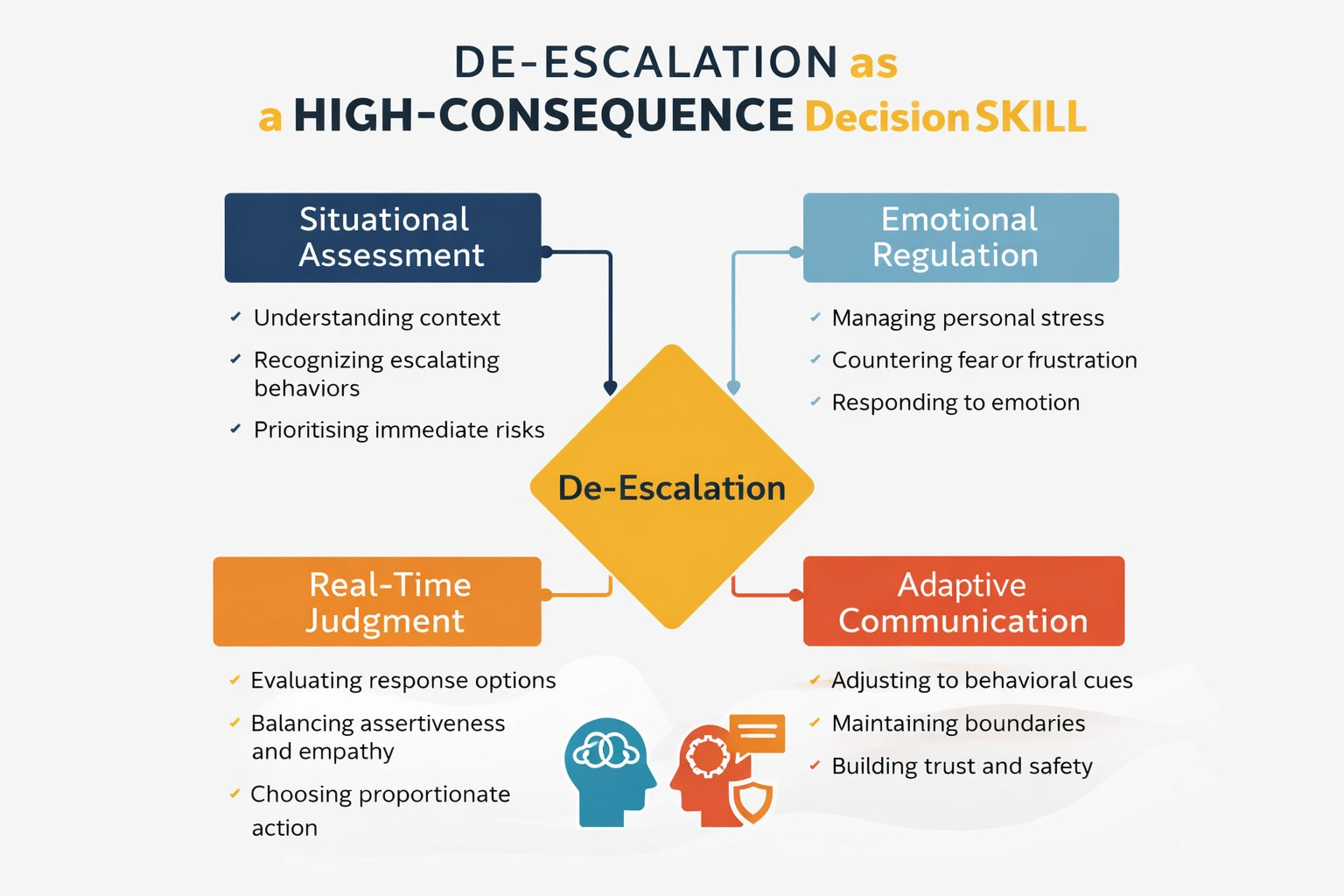
- De-escalation training
- Clear reporting pathways
- Leadership engagement
- Organizational preparedness
When threat assessment becomes part of a larger prevention ecosystem, it stops being reactive and starts becoming anticipatory.
Closing Thought: Prevention Happens in the Gray Space
Violence prevention does not live at the extremes.
It lives in:
- Subtle behavior changes
- Uncomfortable conversations
- Early discomfort
- Incomplete information
Threat assessment exists for that gray space.
Organizations that wait for certainty before acting often wait too long. Organizations that intervene thoughtfully—without panic—change trajectories before harm occurs.
Threat assessment was never meant to predict who will become violent.
It was designed to ensure they don’t have to.