Compliance Is the Floor, Not the Goal: Rethinking Workplace Violence Prevention in 2026

Introduction: When “Compliant” Still Isn’t Safe
In 2026, most organizations should be compliant with workplace violence prevention requirements.
They will have:
- A written policy
- A reporting process
- Documented training
- A response plan
And still—many will remain vulnerable.
Compliance creates legal alignment, not operational readiness. It establishes a baseline, not a safeguard. Yet too often, organizations treat regulatory completion as proof of preparedness.
The uncomfortable truth is this:
Serious incidents have occurred in organizations that were technically compliant.
This article challenges the assumption that meeting requirements equals prevention—and explains why organizations must rethink workplace violence prevention as a living capability, not a static obligation.
Why Compliance Became the Center of Gravity
Regulatory frameworks didn’t emerge without reason. They were created in response to real harm, organizational failures, and legal exposure.
But over time, the intent of these frameworks has been overshadowed by their administration.
Compliance became attractive because it is:
- Measurable
- Auditable
- Defensible
- Delegable
What it is not is adaptive.
Human behavior, conflict escalation, and crisis dynamics do not follow policy timelines or training calendars. When organizations anchor prevention efforts solely to compliance, they build systems optimized for audits—not for people.
The Compliance Trap: What It Gets Right—and What It Misses
Compliance does important work:
- It forces organizations to acknowledge risk
- It establishes minimum expectations
- It creates consistency and accountability
But compliance frameworks rarely address:
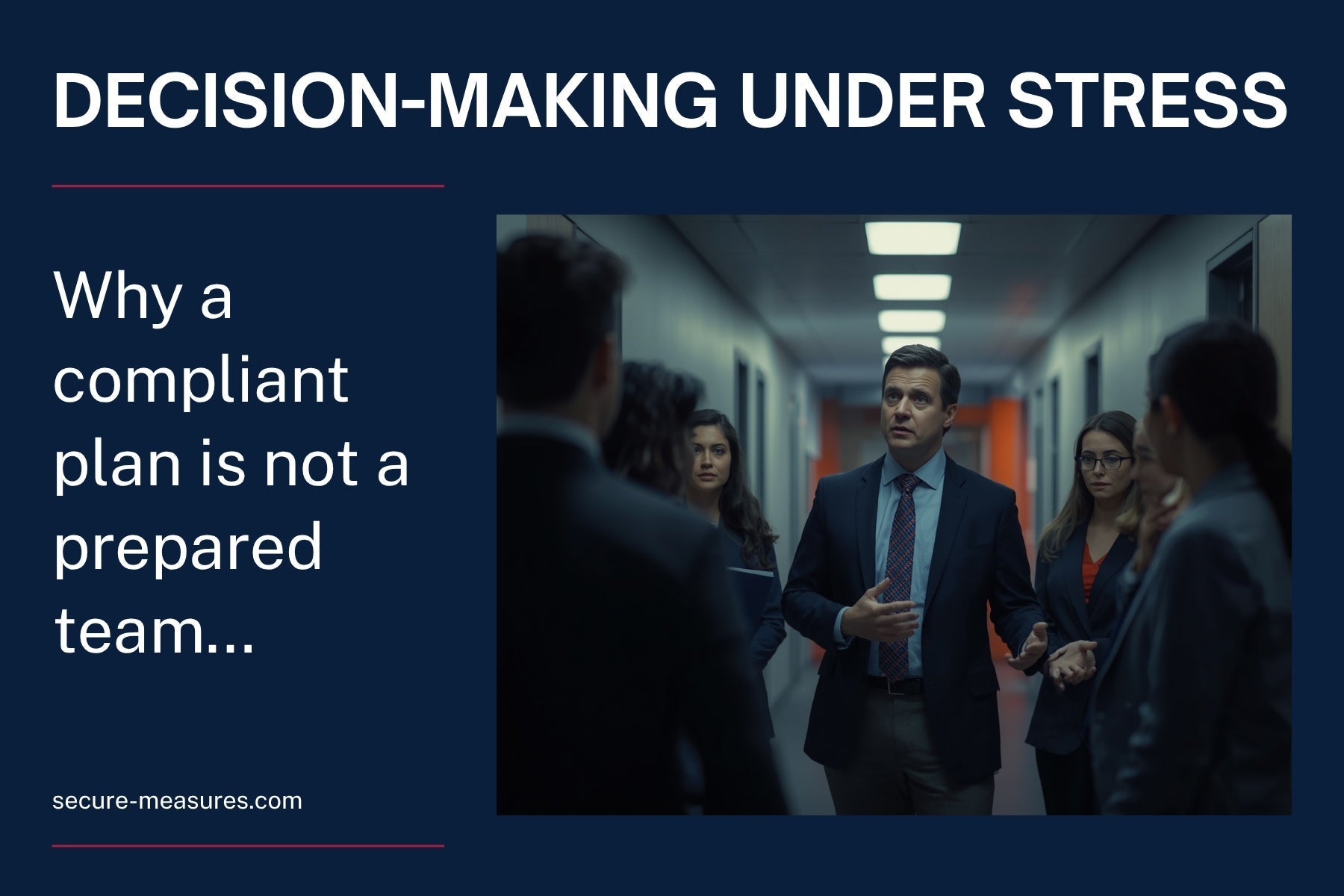
- How people actually behave under stress
- How warning signs surface informally
- How leaders influence safety culture
- How decisions are made in ambiguous moments
As a result, many organizations end up with programs that are technically sound but operationally fragile.
They look solid—until they are tested.
The Problem With “One-and-Done” Prevention
One of the clearest indicators of a compliance-driven mindset is how prevention is scheduled.
Training is often:
- Annual
- Passive
- Information-heavy
- Detached from real-world scenarios
Policies are:
- Reviewed periodically
- Rarely discussed
- Seldom practiced
This cadence sends an unspoken message:
Prevention is an event, not a process.
But workplace violence risk evolves continuously. Stressors change. Teams change. Individuals change. When prevention does not evolve alongside the organization, it quietly degrades.
Compliance Does Not Build Judgment
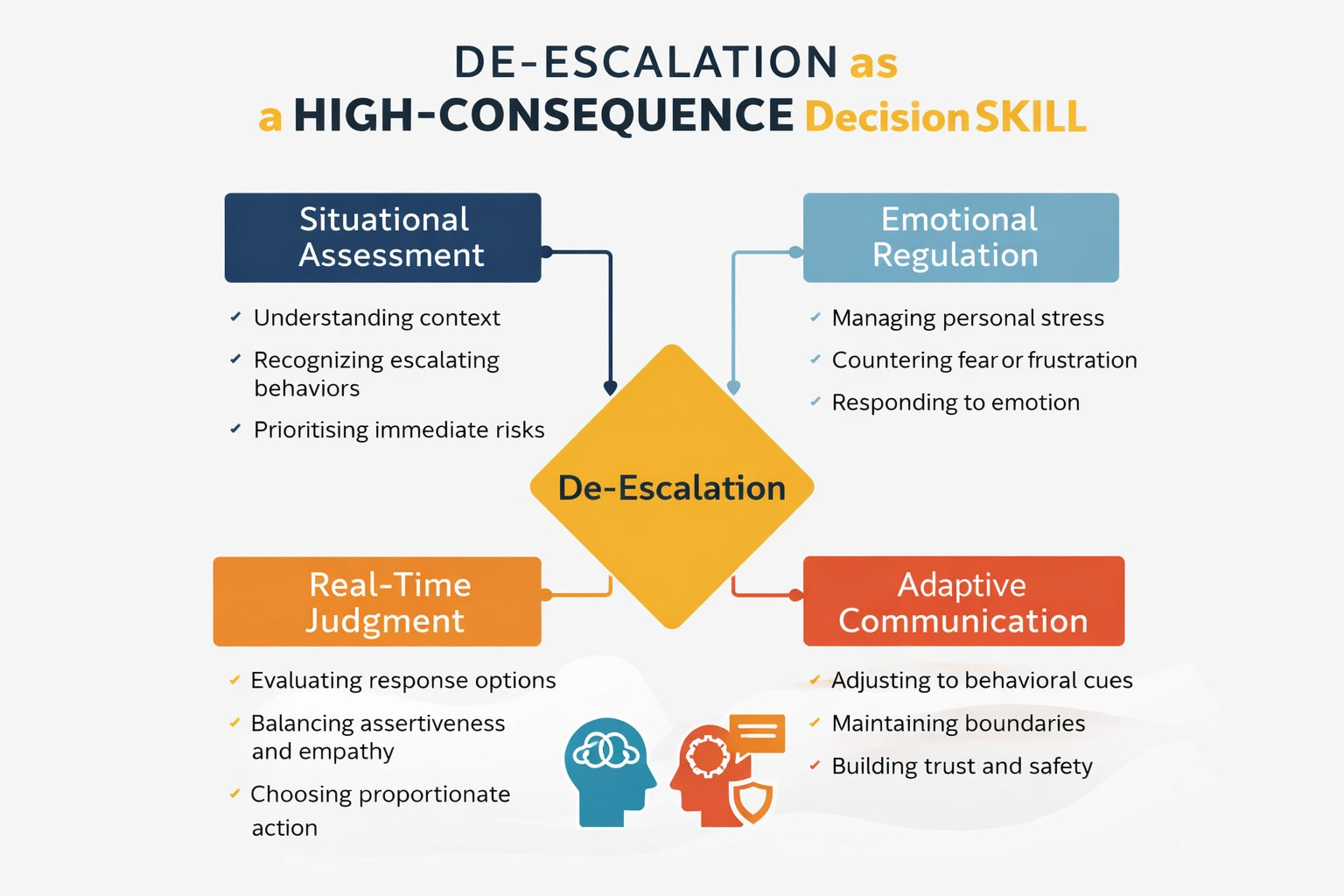
A critical limitation of compliance-focused programs is that they emphasize knowledge acquisition, not judgment formation.
Employees may know:
- Definitions of violence
- Reporting channels
- Policy language
But still feel unprepared to:
- Decide when behavior crosses a threshold
- Intervene early without overreacting
- Navigate emotionally charged interactions
- Act when there is no clear “rule” to follow
Incidents don’t fail because policies were unknown. They fail because judgment was never trained.
Leadership’s Role: Where Compliance Often Stops Short
When prevention is framed as a compliance requirement, leadership involvement tends to be symbolic rather than operational.
Leaders may:
- Approve policies
- Endorse training
- Delegate implementation
But they are often disconnected from:
- Early warning patterns
- Informal conflict dynamics
- Reporting hesitations
- Near-miss indicators
This distance matters.
Employees take behavioral cues from leadership far more than from policy manuals. When leaders treat prevention as a box to check, that posture becomes embedded in organizational culture.
Preparedness is not what leaders say.
It is what they consistently reinforce.
Why “Meeting the Standard” Is Increasingly Insufficient
Regulatory standards are designed to apply broadly. They cannot account for:
- Organizational culture
- Workforce composition
- Industry-specific pressures
- Local risk environments
As a result, they represent the minimum acceptable threshold, not the optimal design.
Organizations that rely exclusively on minimum standards often discover—after an incident—that they were prepared for compliance review, not for human crisis.
In 2026 and beyond, organizations will be judged not just on whether they met requirements, but on whether their systems worked.
Rethinking Prevention as a Capability
Organizations that move beyond compliance share a different mindset.
They treat workplace violence prevention as:
- A leadership responsibility
- A decision-making discipline
- A cultural commitment
- An evolving system
This shift reframes prevention from “What do we need to have?” to “How do we need to function?”
Capability-focused programs emphasize:
- Early identification
- Proportional response
- Coordinated decision-making
- Ongoing reinforcement
They accept that prevention is never finished.
What Beyond-Compliance Prevention Looks Like in Practice
1. Prevention Is Embedded, Not Isolated
Risk awareness is woven into daily operations, not siloed in policy binders.
2. Training Builds Confidence, Not Just Awareness
Employees practice decision-making in realistic, ambiguous scenarios.
3. Reporting Is Supported by Trust
People believe speaking up will lead to thoughtful, measured action.
4. Leadership Is Actively Engaged
Leaders understand risk trends and reinforce expectations consistently.
5. Programs Are Reviewed Through a Behavioral Lens
Effectiveness is measured by outcomes, not attendance.
The Strategic Advantage of Moving Beyond Compliance
Organizations that exceed minimum standards gain more than safety.
They gain:
- Faster intervention
- Reduced escalation
- Greater employee trust
- Stronger legal defensibility
- Cultural resilience
Ironically, the organizations most protected legally are often those that did the most operationally, not the least required.
Looking Ahead: Why 2026 Demands a New Lens
Workplace environments are becoming more complex—not less.
Factors such as:
- Heightened stress
- Remote and hybrid work
- Public-facing roles
- Mental health strain
- Social polarization
Increase the likelihood of conflict and crisis.
Compliance frameworks will continue to evolve—but they will always lag reality.
Organizations that wait for regulation to tell them what to do will always be behind the risk curve.
Closing Thought: Compliance Keeps You Legal—Capability Keeps You Safe
Compliance is necessary.
But it was never meant to be sufficient.
The organizations that reduce harm most effectively understand this distinction early. They build systems designed for human behavior, not just regulatory review.
In 2026, the question should no longer be:
“Are we just compliant?”
It will be:
“Would our program actually work if tested tomorrow?”